
A soft-tissue lump in a child does not always mean cancer. Many lumps are harmless, but some can be soft-tissue sarcomas and need specialist assessment.
When a tumour needs surgery, the goal is not simply to remove the lump. The surgeon also needs to consider the child's movement, growth, appearance and long-term function. The surgical approach depends on the type, size and location of the tumour and its relationship with nearby muscles, nerves, blood vessels and other structures.
Some children may have surgery as the main treatment esp the non-cancerous. In other situations, chemotherapy or radiation therapy may be given before or after surgery. The treatment plan is decided according to the individual tumour and the child's overall condition.
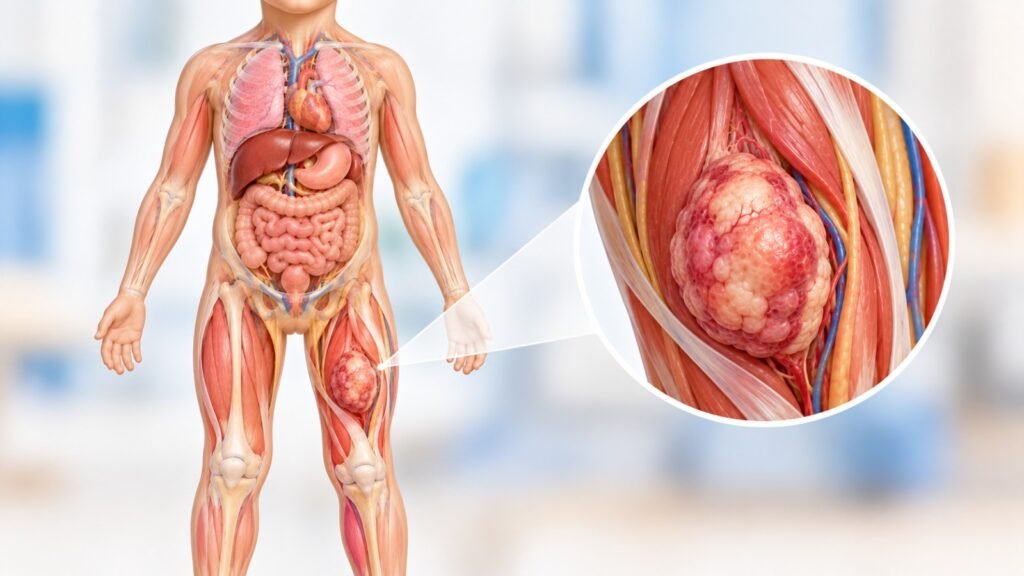
Soft tissues include the muscles, fat, connective tissues and other tissues that support and connect different parts of the body.
A soft-tissue tumour can be benign, meaning it is not cancer, or malignant, meaning it is cancerous. Soft-tissue sarcoma is a group of cancers that can develop in these tissues.
Children can develop different types of soft-tissue sarcomas. These include rhabdomyosarcoma and less common tumours such as synovial sarcoma, fibrosarcoma, malignant peripheral nerve sheath tumour and other rare sarcoma types.
Because these tumours are different from one another, their treatment cannot be planned using one standard approach. The pathology, location and extent of the tumour all matter when deciding whether surgery is appropriate and how it should be performed.
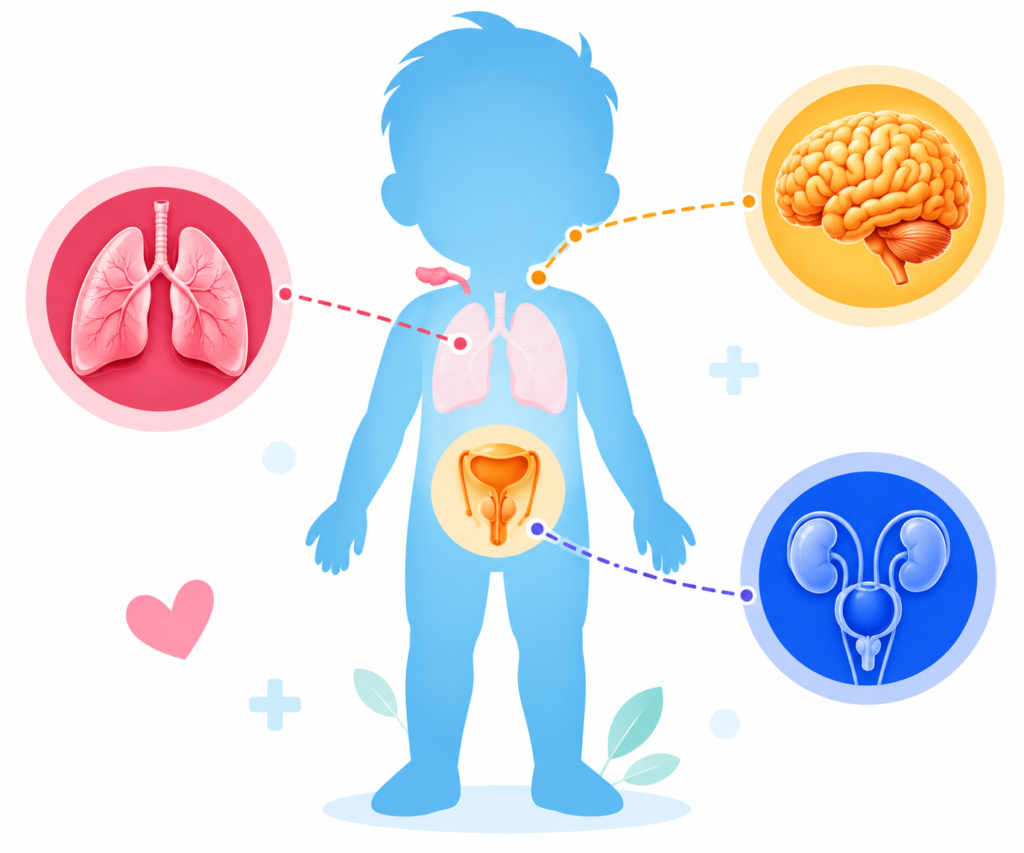
Before planning an operation, the tumour needs to be assessed carefully.
The evaluation may include a physical examination and imaging. An MRI is particularly useful for many soft-tissue tumours because it can show the size and depth of the tumour and its relationship with nearby structures. Ultrasound or CT may also be used when appropriate.
If cancer is suspected, a biopsy may be needed to identify the exact type of tumour. A core needle biopsy or an incisional biopsy may be considered depending on the location and characteristics of the mass.
The biopsy itself needs to be planned carefully. The position of the biopsy tract or incision can affect the later operation. This is why a suspicious soft-tissue mass should not simply be removed as an ordinary lump without considering the possibility of cancer.
Once the imaging and pathology information is available, the surgeon can assess how the tumour can be removed.
Several factors are considered, including:
For tumours in the arms or legs, MRI can help define the relationship between the tumour and important structures before surgery. This information helps the surgeon plan an operation that aims for complete tumour removal while avoiding unnecessary damage to healthy tissue.
For many pediatric soft-tissue sarcomas, surgery aims to remove the tumour completely when this can be done safely.
One common approach is called wide local excision. This means removing the tumour along with an appropriate amount of surrounding tissue.
The amount of tissue that needs to be removed is not the same for every child. It depends on the tumour’s type, size, location and involvement of nearby structures.
Removing more tissue does not automatically mean better treatment. The surgeon needs to balance cancer control with preservation of normal tissue and function.
When complete removal is possible without causing unacceptable loss of function, surgical resection can be an important part of treatment. In some children, however, the safest approach may involve treatment before surgery to make the tumour easier to remove.
After the tumour is removed, the tissue is examined by a pathologist.
One important part of the report is the surgical margin. This refers to the edge of the tissue removed with the tumour.
The pathology report helps determine whether tumour cells are present at the edge of the removed tissue. A clear microscopic margin means no tumour cells are seen at the examined edge. If tumour cells are found at the margin, the result may affect the next step in treatment.
Sometimes, another operation may be considered to remove additional tissue. In other situations, the treatment plan may involve other forms of cancer treatment.
The meaning of a surgical margin should always be considered along with the tumour type, location and other pathology findings rather than as a single measurement.
For a growing child, successful surgery is about more than removing the tumour.
Whenever safely possible, the surgical plan also considers how the child will use the affected part of the body after treatment. This may involve protecting important nerves, blood vessels, muscles and joints.
For a tumour in an arm or leg, limb-sparing surgery may be considered when the tumour can be removed while preserving useful function. Reconstruction may sometimes be performed at the same time or as part of the overall surgical plan.
However, limb preservation is not appropriate in every situation. If a tumour involves critical structures or cannot be removed safely while preserving a functional limb, other surgical approaches may need to be considered.
The child’s age, growth and long-term function are important parts of this decision.
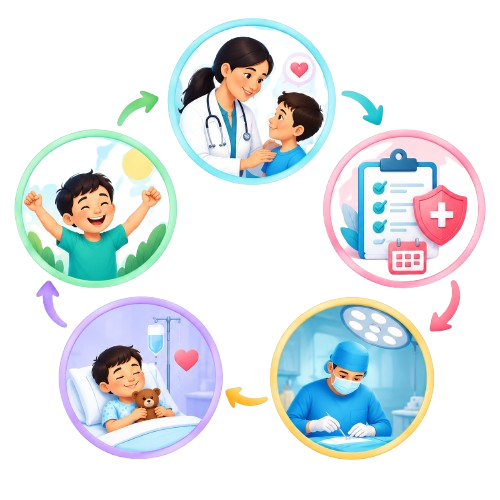
Surgery does not always have to be the first treatment.
If a tumour can be removed safely at diagnosis, surgery may be performed first. In other cases, chemotherapy or radiation therapy may be considered before surgery.
Treatment before surgery is sometimes used when a tumour is large or difficult to remove without significant loss of healthy tissue or function. Reducing the tumour or treating the surrounding area first may help make a later operation more manageable.
Additional treatment may also be recommended after surgery depending on the tumour type, extent of disease and pathology findings.
There is no single treatment sequence that is suitable for every child with a soft-tissue tumour. The timing of surgery needs to be decided according to the individual case.
The location of a soft-tissue tumour can significantly change the way surgery is planned.
The surgeon may need to work around muscles, tendons, nerves and blood vessels while trying to preserve movement. Limb-sparing surgery may be considered when safe and appropriate.
Tumours in the chest wall or trunk may involve muscles and other nearby tissues. The amount of tissue removed can affect the strength and shape of the area, and reconstruction may sometimes be required.
The surgical plan depends on the tumour’s relationship with nearby organs, blood vessels and other important structures. The child’s age and future function are also considered.
Tumours in this area can be particularly complex because of the close relationship with nerves, blood vessels and the airway. Preserving important functions and appearance may be an important part of surgical planning.
For all locations, the exact operation depends on the individual tumour rather than its location alone.
Sometimes another operation is needed after the first surgery.
This may happen when tumour cells are found at the surgical margin, when the first operation was performed without knowing that the mass was cancerous, or when there is evidence of residual or recurrent tumour. This is called Pre Treatment Re-excision.
An important point for parents is that a scan does not always provide the complete answer after an unplanned operation. Changes caused by surgery can make it difficult to distinguish residual tumour from normal healing changes.
If a soft-tissue sarcoma was unexpectedly removed elsewhere, the previous pathology, scans and operative details should be reviewed before deciding what to do next. Re-excision may be considered when further surgery can help achieve appropriate tumour control.
Lymph-node surgery is not routinely required for every child with a soft-tissue sarcoma.
The need to assess lymph nodes depends partly on the type of tumour and whether there are findings that suggest lymph-node involvement. Some tumour types, including certain less common sarcomas, have a greater tendency to involve lymph nodes.
In selected cases, lymph-node sampling or a sentinel lymph-node procedure may be considered. The decision should be based on the child’s specific tumour rather than used as a standard part of every soft-tissue tumour operation.
Removing a tumour can sometimes leave a gap or defect in the skin, muscle or other soft tissues.
When needed, reconstruction can help provide soft-tissue coverage and support movement or stability. In some children, reconstructive surgery may be planned together with tumour removal.
The need for reconstruction depends on how large the tumour is, where it is located and which structures need to be removed.
The aim is to restore the best possible function while maintaining safe tumour removal.
Recovery after surgery varies from child to child.
The recovery period depends on the location and extent of surgery and whether other treatments are also needed. Some children may need physiotherapy or rehabilitation to regain strength and movement.
Follow-up is also important after treatment. Depending on the child’s diagnosis, follow-up may include physical examinations, imaging and assessment of the treated area.
The purpose is to monitor recovery, assess long-term function and look for any signs that require further evaluation.
 Posted on Google

 Sweta Kalgude
Trustindex verifies that the original source of the review is Google.
We are so grateful for Dr. Monica Bhagat! She is an incredibly kind, caring, and cooperative doctor. She treated my child with so much love and gentle care, which meant the world to us during those anxious moments. She took the time to explain every detail of the treatment so we always understood what was happening, and she was always there to patiently answer our questions whenever we had doubts. Her hands-on expertise and warm heart gave us so much comfort. We highly recommend her to any family! ❤️Posted on Google Praveen SureshDr. Monica Bhagat is an exceptional oncology surgeon who combines extensive knowledge and experience with genuine empathy and compassion. She is courteous, patient, and takes the time to make you feel comfortable and heard. Her professionalism and caring approach really stand out. Highly recommended!Posted on Google
 Dipak PandeThank you for treating our child with so much love and care ...Posted on Google
 GOPAL KumarDr. Monica is the best pediatric oncosurgeon in Mumbai. She explains everything in a very easy language. Highly recommended 💯Posted on Google
 Ravi FuleriyaDr. Monica is an good surgeon, really supportive and nice explanation, thankyouPosted on Google
 Vaibhav PataniWe consulted Dr. Monica Bhagat in Mumbai and had a really good experience. She is a very patient and approachable pediatric oncosurgeon. She explained everything clearly and answered all our questions without rushing us. Very thankful for her guidance and support.
The approach depends on the size, location and characteristics of the lump. When a tumour is suspected, imaging and a properly planned biopsy may be needed before definitive surgery. Removing a suspicious mass without planning can make later treatment more difficult.
The next step should be decided after reviewing the pathology report, scans and details of the previous operation. If the first removal was not planned as cancer surgery, further assessment or re-excision may sometimes be needed.
MRI can provide useful information about the area where the tumour was removed. However, normal postoperative changes such as swelling or fluid can make interpretation more difficult. The scan needs to be considered along with the original pathology and details of the surgery.
The answer depends on the tumour's location, the structures involved and how much tissue needs to be removed. The surgical plan aims to preserve useful movement and function whenever this can be done safely, but the expected outcome is different for every child.
The possible effect depends on the child's age, tumour location and the structures involved in surgery. This is one reason why treatment planning in children needs to consider not only immediate tumour removal but also long-term development and function.
Families should bring available pathology and biopsy reports, scan reports and images, previous treatment records and the operative report if surgery has already been performed. Having the complete information helps the surgeon understand what has already been done and plan the next step.
A child should be assessed by a specialist when a soft-tissue mass is persistent, enlarging, unusual or otherwise concerning. If cancer is suspected, early specialist assessment can help ensure that imaging, biopsy and any subsequent surgery are planned appropriately.
For families, choosing where a child with a suspected or confirmed soft-tissue tumour is evaluated is an important decision. The surgical plan should begin with an appropriate review of the child's examination, imaging and pathology, rather than proceeding directly to tumour removal without adequate planning.
Pediatric soft-tissue tumour surgery requires careful attention to both cancer control and the child's long-term function. A specialist pediatric cancer surgeon can help families understand whether surgery is appropriate, when it should be performed and what options may help preserve normal function.
Dr. Monica Bhagat
Typically replies within minutes
Any questions related to Soft Tissue Sarcoma?
WhatsApp Us
Online | Privacy policy
Balco Medical Centre, Vedanta Medical Research Foundation, Sector-36, AtalNaga, PO:Uparwar, Raipur, Chhattisgarh 493661
Mulund - Goregaon Link Rd Nahur West, Industrial Area, Bhandup West, Mulund West, Mumbai, Maharashtra 400078
1, 1A, Keshavrao Khadye Marg, Haji Ali, Haji Ali Government Colony, Mahalakshmi, Mumbai, Maharashtra 400034,
1st, Pokhran Rd, Shastri Nagar, Vartak Nagar, Thane West, Thane, Maharashtra 400606
Thane Hiranandani Estate, Queens Street, opposite the Brentford Building, Patlipada, Ghodbunder Road, Thane West, Maharashtra 400607.