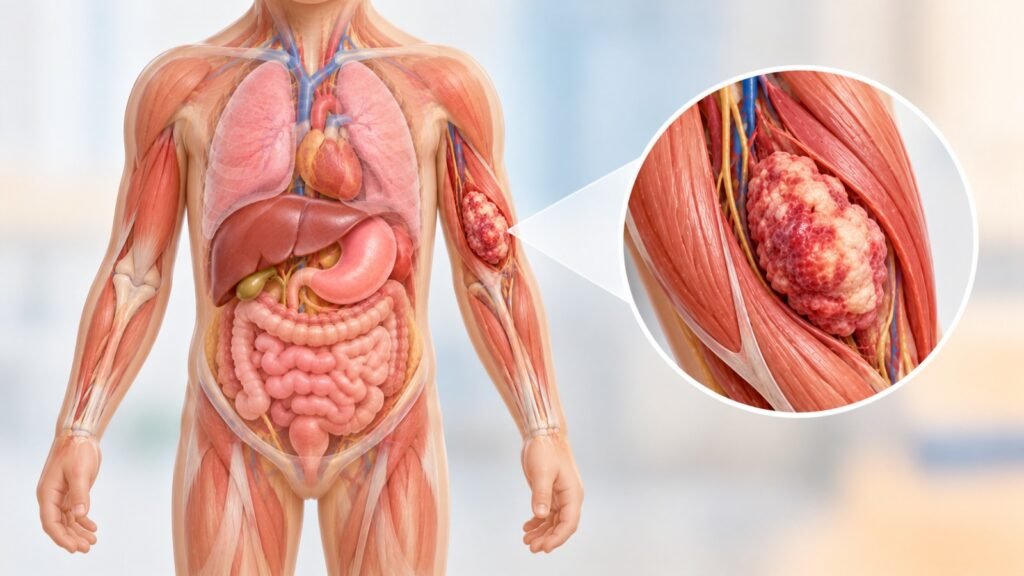
Rhabdomyosarcoma is a cancer that develops in soft tissues and can occur in different parts of a child's body. Because the tumour can develop in many locations, its treatment is not the same for every child.
Treatment usually combines chemotherapy with local treatment, which may include surgery, radiation therapy, or both. The plan depends on where the tumour started, its size and extent, its pathology, whether lymph nodes or other organs are involved, and how the tumour responds to treatment.
For children, treatment planning also needs to consider growth, movement, organ function and long-term quality of life. A multidisciplinary pediatric cancer team brings these factors together before deciding on the most appropriate treatment approach.
Treatment planning begins with confirming the diagnosis and understanding how far the disease has spread.
Doctors consider:
A biopsy is important for confirming rhabdomyosarcoma and other soft tissue tumors, it helps understanding pathological characteristics including aggressiveness. In some cases, additional molecular testing may also provide information that helps with risk assessment and treatment planning.
Rhabdomyosarcoma treatment has two important goals: treating cancer throughout the body and controlling the tumour at its original site.
Chemotherapy is a systemic treatment. It travels through the bloodstream and treats cancer cells that may be present beyond the main tumour. It also helps to decrease the size of the tumour.
Surgery and radiation therapy are local treatments. They focus on controlling the tumour in the area where it started.
Children with rhabdomyosarcoma generally receive systemic chemotherapy along with surgery, radiation therapy, or both. The combination and timing depend on the child’s risk group, tumour location, response to treatment and other clinical findings.
Surgery can be an important part of local tumour control, but removing the tumour immediately is not appropriate for every child.
If the tumour can be completely removed without causing major functional or cosmetic problems, surgical resection may be considered. In other situations, an initial biopsy may be safer, followed by chemotherapy and radiation therapy as part of the treatment plan.
Chemotherapy may also be given before surgery to reduce the tumour and make local treatment safer. In selected children, a delayed operation may be considered if the remaining tumour can be removed without unacceptable effects on function or appearance.
The aim is not simply to remove as much tissue as possible. The surgical plan needs to balance tumour control with the child’s long-term function and quality of life.
The location of rhabdomyosarcoma is one of the most important factors in deciding local treatment.
Tumours around the eye, ear, nose, sinuses or skull base need particularly careful planning because surgery can affect important functions and appearance.
For tumours around the eye, biopsy followed by chemotherapy and radiation therapy is generally used rather than removing the eye as an initial treatment. For other head and neck tumours, the treatment may involve chemotherapy and radiation therapy, with surgery considered when the tumour can be safely removed.
For tumours in the limbs, treatment aims to control the cancer while preserving movement and function.
Chemotherapy is combined with local treatment. Surgery may be possible for some tumours, while radiation therapy may be preferred when removing the tumour would significantly affect the function of the hand, foot or limb. The radiation therapy if possible can be given in the form of brachytherapy is feasible for the tumor.
Assessment of nearby lymph nodes may also be important for certain extremity tumours.
Tumours in the abdomen and pelvis can involve organs and structures important for digestion, urination and reproductive function.
The treatment plan therefore depends on the exact location and extent of the tumour. Chemotherapy and radiation therapy may be used before or around surgery to improve local control while limiting the need for extensive surgery when possible.
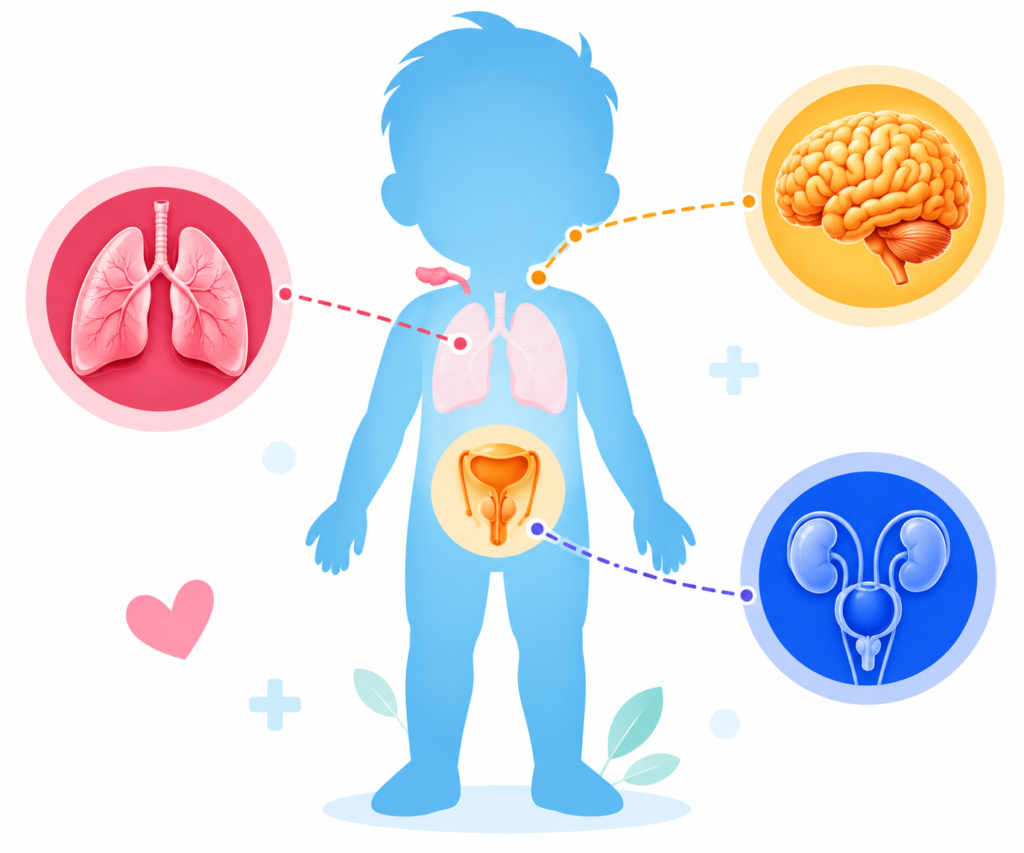
Rhabdomyosarcoma can also develop in the bladder, prostate, testicular or paratesticular region, vagina, uterus and other genital sites.
Treatment varies considerably between these locations. In some children, chemotherapy and radiation are used to control the tumour while avoiding removal of an important organ. Surgery may be used when residual disease remains or when it can be performed safely.
For a child, successful cancer treatment is about more than controlling the tumour.
Whenever medically appropriate, treatment planning also considers the child’s ability to move, grow and use the affected body part normally.
This may influence the choice between surgery, radiation therapy or a combination of treatments. For example, removing a tumour from the hand, foot, eye or another sensitive area may cause significant functional or cosmetic problems.
The goal is to achieve effective tumour control while avoiding unnecessary damage to healthy tissues.
Chemotherapy is a central part of treatment for childhood rhabdomyosarcoma. It may be given before local treatment to reduce the tumour or as part of treatment after local control.
Radiation therapy is another important method of local tumour control. Its use depends on factors such as the child’s age, tumour location, pathology, lymph-node involvement and whether tumour remains after surgery or biopsy.
For very young children, the treatment team may need to give particular attention to the possible long-term effects of radiation while still maintaining effective local tumour control. This requires careful individualised planning.
Rhabdomyosarcomas can involve nearby lymph nodes. The risk and need for lymph-node assessment depend partly on where the tumour started.
Rhabdomyosarcoma can also spread to distant parts of the body. The lungs, bones and bone marrow are among the sites that may be involved.
When metastatic disease is present, treatment generally includes systemic chemotherapy along with treatment directed at the primary tumour and, when appropriate, sites of spread. The approach depends on the location and extent of metastatic disease.
Rhabdomyosarcoma can sometimes return after initial treatment. When this happens, the next treatment plan depends on where the cancer has returned, how extensive it is and which treatments the child has already received.
Treatment may include surgery, radiation therapy, chemotherapy or a combination of approaches. Clinical trials may also be considered in some situations.
A detailed review of previous scans, pathology and treatment records is important before deciding on further treatment.
Follow-up continues after active treatment has finished.
Doctors monitor for any sign that the cancer has returned and assess how the child is recovering from treatment. Depending on the treatment received, follow-up may also focus on movement, organ function, growth and other possible long-term effects.
Children who have undergone cancer treatment may need long-term follow-up because some effects of treatment can appear months or years later.
Rhabdomyosarcoma treatment requires coordination between several specialists.
The team may include a pediatric surgical oncologist, pediatric medical oncologist, radiation oncologist, pediatric radiologist, pathologist, anesthesiologist, rehabilitation specialist and other supportive care professionals.
Because treatment can vary considerably according to the tumour’s location and risk group, these specialists need to plan treatment together rather than making decisions in isolation.
A second opinion can help families understand the diagnosis and treatment plan, particularly when the tumour is close to an important organ or structure.
Parents may also seek another specialist opinion when surgery has been recommended, when organ or limb preservation is a concern, when radiation therapy has been suggested, or when the cancer has returned.
A review of the pathology, scans and previous treatment can help clarify the available options and the role of surgery in the overall treatment plan.
 Posted on Google

 Sweta Kalgude
Trustindex verifies that the original source of the review is Google.
We are so grateful for Dr. Monica Bhagat! She is an incredibly kind, caring, and cooperative doctor. She treated my child with so much love and gentle care, which meant the world to us during those anxious moments. She took the time to explain every detail of the treatment so we always understood what was happening, and she was always there to patiently answer our questions whenever we had doubts. Her hands-on expertise and warm heart gave us so much comfort. We highly recommend her to any family! ❤️Posted on Google Praveen SureshDr. Monica Bhagat is an exceptional oncology surgeon who combines extensive knowledge and experience with genuine empathy and compassion. She is courteous, patient, and takes the time to make you feel comfortable and heard. Her professionalism and caring approach really stand out. Highly recommended!Posted on Google
 Dipak PandeThank you for treating our child with so much love and care ...Posted on Google
 GOPAL KumarDr. Monica is the best pediatric oncosurgeon in Mumbai. She explains everything in a very easy language. Highly recommended 💯Posted on Google
 Ravi FuleriyaDr. Monica is an good surgeon, really supportive and nice explanation, thankyouPosted on Google
 Vaibhav PataniWe consulted Dr. Monica Bhagat in Mumbai and had a really good experience. She is a very patient and approachable pediatric oncosurgeon. She explained everything clearly and answered all our questions without rushing us. Very thankful for her guidance and support.
No. Rhabdomyosarcoma is a specific type of soft tissue sarcoma with its own pathological and clinical characteristics. It can develop in different parts of the body, so treatment also varies according to the tumour's location and other disease characteristics.
No. Surgery is one method of local tumour control, but it may not be appropriate as the initial treatment when removing the tumour could cause major functional or cosmetic problems. Chemotherapy and radiation therapy may be used as part of local control instead or before surgery, depending on the child's condition.
It can depend on where the tumour is located and which treatments are required. This is why preservation of function is considered when choosing local treatment. Surgery, radiation therapy and rehabilitation may all need to be planned with the child's long-term function in mind.
A biopsy provides tumour tissue that can be examined by a pathologist. It helps confirm the diagnosis and identify characteristics of the tumour that may affect treatment planning. Additional molecular testing may also be used in some cases.
It can. The likelihood and the need for lymph-node assessment depend partly on where the tumour started. Lymph-node evaluation is particularly important for certain tumour locations, including some tumours of the limbs and paratesticular region.
Yes. A second opinion can still be useful after treatment has begun, particularly when a major surgery or local treatment decision is being considered. The specialist can review the child's pathology, scans and treatment history before providing an opinion.
Parents may want to understand the purpose of surgery, whether complete removal is expected, how the operation could affect function, whether other treatments are planned, and what alternatives may be available
Yes, recurrence is possible. If the cancer returns, treatment depends on where it has come back, the extent of disease and the treatments the child received previously. Further surgery, chemotherapy, radiation therapy or a clinical trial may be considered depending on the situation.
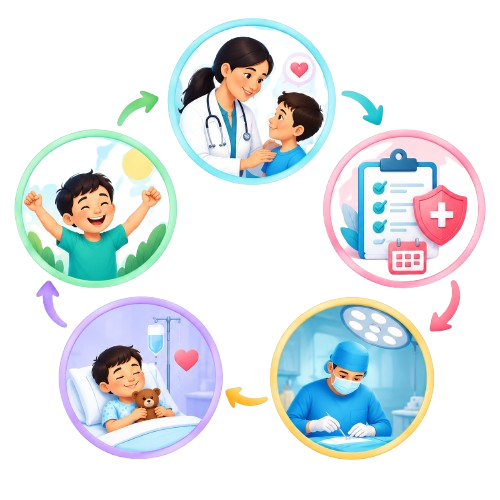
A rhabdomyosarcoma diagnosis can raise difficult questions about surgery, chemotherapy, radiation therapy and how treatment may affect a child's growing body.
A consultation with a pediatric surgical oncologist can help families understand the diagnosis, available treatment options and the role of surgery in the overall treatment plan.
Dr. Monica Bhagat
Typically replies within minutes
Any questions related to Rhabdomyosarcoma Surgery?
WhatsApp Us
Online | Privacy policy
Balco Medical Centre, Vedanta Medical Research Foundation, Sector-36, AtalNaga, PO:Uparwar, Raipur, Chhattisgarh 493661
Mulund - Goregaon Link Rd Nahur West, Industrial Area, Bhandup West, Mulund West, Mumbai, Maharashtra 400078
1, 1A, Keshavrao Khadye Marg, Haji Ali, Haji Ali Government Colony, Mahalakshmi, Mumbai, Maharashtra 400034,
1st, Pokhran Rd, Shastri Nagar, Vartak Nagar, Thane West, Thane, Maharashtra 400606
Thane Hiranandani Estate, Queens Street, opposite the Brentford Building, Patlipada, Ghodbunder Road, Thane West, Maharashtra 400607.