
Germ cell tumours can develop in the ovaries, testes or other parts of a child’s body. They may be benign or malignant, and treatment depends on the tumour type, location, stage, the child’s age and clinical findings.
Surgery may remove the tumour, provide tissue for diagnosis or address a residual mass after chemotherapy. In some cases, chemotherapy is needed before surgery. Treatment planning aims to manage the tumour safely while preserving healthy tissue wherever possible.
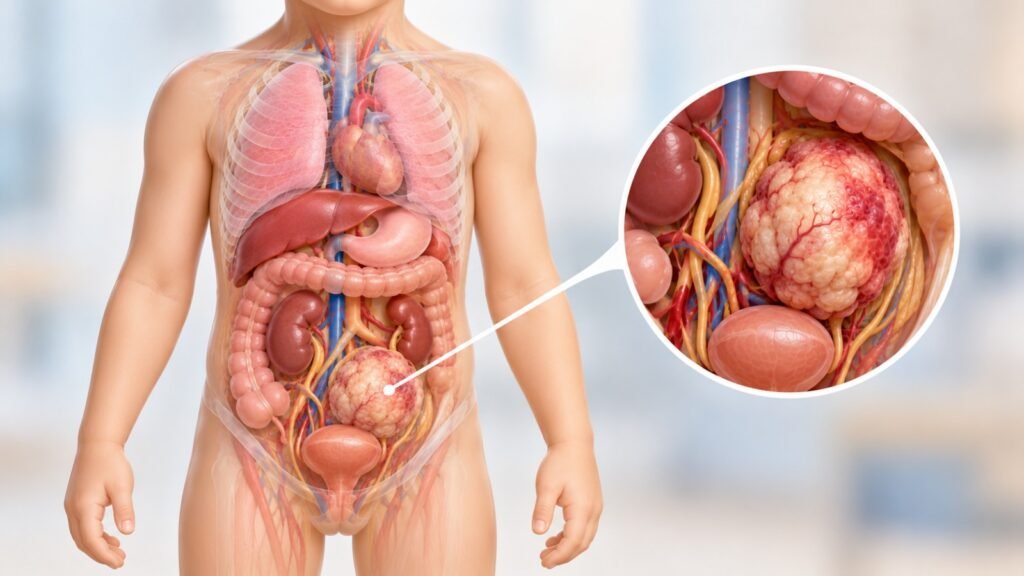
Germ cells are involved in reproductive development. Germ cell tumours are classified as gonadal when they arise in the ovaries or testes, and extragonadal when they develop elsewhere in the body. Extragonadal sites include the mediastinum, sacrococcygeal region and retroperitoneum.
Common types include mature and immature teratomas, yolk sac tumours, dysgerminomas and mixed germ cell tumours. Their behaviour varies, so the tumour type and clinical findings are important in deciding treatment. Location alone does not determine whether a tumour is benign or malignant.
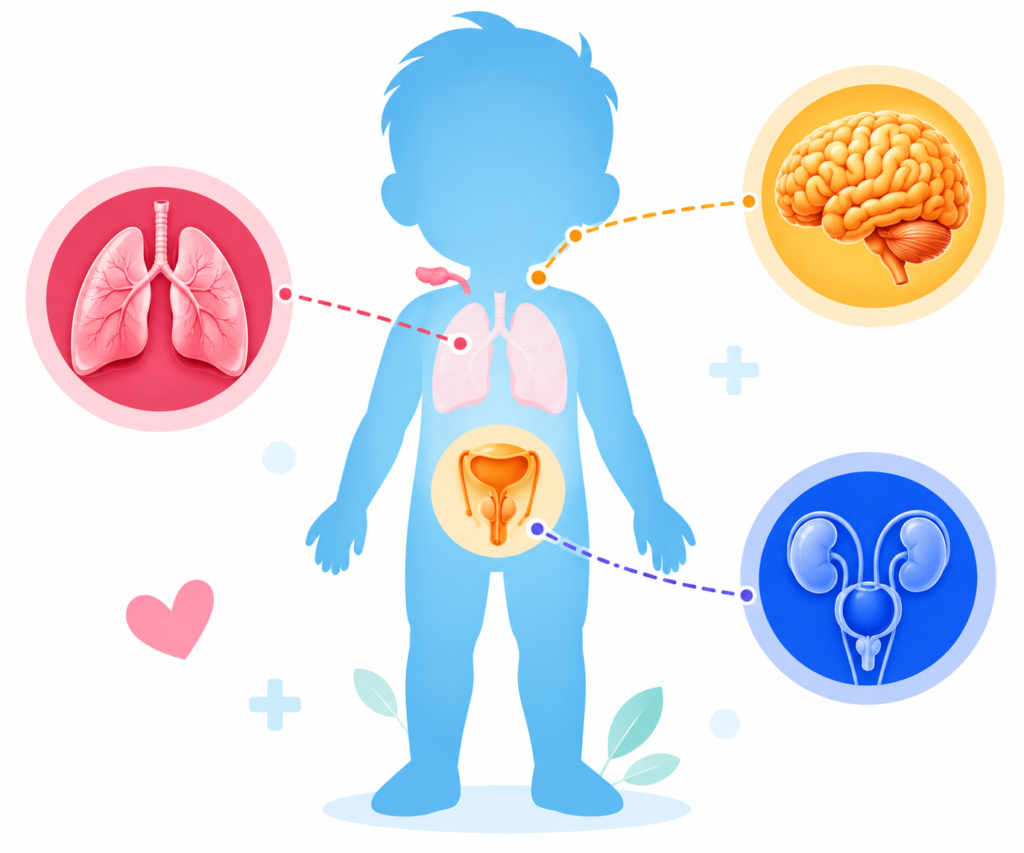
Assessment may include a medical history, physical examination, ultrasound for ovarian or testicular masses, and further imaging to understand the tumour’s size and extent. Blood tests may include alpha-fetoprotein (AFP) and beta-human chorionic gonadotropin (β-hCG), depending on the suspected tumour type.
AFP levels are naturally higher in infants and decline with age, so results must be interpreted according to the child’s age. Not all germ cell tumours produce AFP or β-hCG; normal results do not rule out every type.
Histopathological examination helps establish the diagnosis. Whether a biopsy is needed before surgery depends on the tumour’s location, suspected type and planned treatment. In some cases, the removed tumour provides the tissue needed for diagnosis. In others, a biopsy followed by chemotherapy may be recommended, particularly when immediate removal could be unsafe or affect the treatment plan.
Ovarian germ cell tumours may cause abdominal pain, swelling or a palpable mass. Some are discovered during investigations for unrelated concerns. Ultrasound, additional imaging when needed and tumour-marker tests help guide the assessment.
The aim of surgery is to remove the tumour safely while preserving normal ovarian tissue when this is feasible and oncologically appropriate. Ovarian-sparing surgery may be suitable in selected cases, depending on the tumour’s size, extent, suspected type and the amount of healthy tissue that can be retained safely.
Avoiding tumour rupture or spillage during surgery is important because it can affect staging and subsequent treatment decisions. The surgical plan should be tailored to the individual child, with final pathology reviewed by the multidisciplinary team.
Depending on the tumour type and stage, further management may involve surveillance or chemotherapy. Not every ovarian germ cell tumour requires the same treatment.
A lump or swelling in a child’s testicle needs prompt medical assessment. Ultrasound and age-adjusted tumour markers, particularly AFP when indicated, help guide the evaluation.
The surgical approach depends on the child’s age, examination findings, imaging and the likelihood of a benign or malignant tumour. For a suspected malignant testicular germ cell tumour in a prepubertal boy, the usual approach is inguinal exploration and radical inguinal orchiectomy, which involves removing the affected testicle through an incision in the groin. A trans-scrotal biopsy should generally be avoided when malignancy is suspected because it may compromise oncological management.
Testis-sparing surgery may be considered in carefully selected cases when the findings suggest a benign lesion and sufficient healthy testicular tissue can be preserved. It is not the standard approach for a suspected malignant tumour. In selected cases, intraoperative assessment, including frozen-section examination where appropriate and available, may help guide the decision.
Adolescents may require a different diagnostic and treatment pathway from younger children. Final histology, staging and tumour-marker trends help determine whether surveillance, chemotherapy or further treatment is needed.
Extragonadal germ cell tumours develop outside the ovaries and testes. They may occur in the mediastinum, sacrococcygeal region or retroperitoneum. Treatment planning takes into account the tumour’s location, size, involvement of nearby structures, histology, stage and whether it can be safely removed.
Surgery is not always the first step. Depending on the tumour type and stage, treatment may involve removing the tumour first, performing a biopsy followed by chemotherapy, or giving chemotherapy before surgery to remove residual disease. The sequence is decided by the multidisciplinary team based on the individual case.
When a germ cell tumour affects an ovary or testicle, future reproductive function is an important consideration. The surgical team considers preserving healthy tissue wherever this can be done safely without compromising cancer treatment.
However, preserving an ovary or testicle does not guarantee future fertility. The tumour itself, surgery and additional treatment may all affect reproductive function.
If chemotherapy or radiotherapy is being considered, parents should discuss possible effects on fertility before treatment whenever feasible. Available fertility-preservation options depend on the child’s age, pubertal status, diagnosis, urgency of treatment and access to specialist services. Options for prepubertal children may be limited and require specialist counselling.
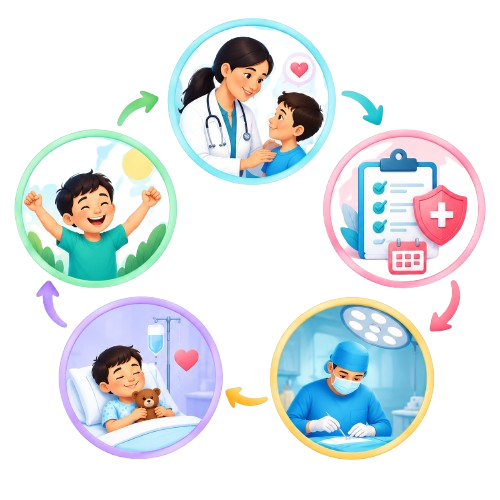
Further treatment depends on the final pathology, tumour stage, marker trends, imaging and surgical findings. Some children may need surgery followed by surveillance, while others require chemotherapy before or after surgery. Chemotherapy is not necessary for every germ cell tumour.
Follow-up may include clinical examinations, tumour-marker tests and imaging, depending on the tumour type, stage and treatment received. Parents should receive a clear follow-up plan and know whom to contact if new symptoms develop.
Parents may find it helpful to ask the surgical team:
Bring previous scan images as well as written reports, blood test results, pathology reports and details of any treatment already received. Follow the treating team’s instructions about fasting, medicines and hospital admission.
 Posted on Google

 Sweta Kalgude
Trustindex verifies that the original source of the review is Google.
We are so grateful for Dr. Monica Bhagat! She is an incredibly kind, caring, and cooperative doctor. She treated my child with so much love and gentle care, which meant the world to us during those anxious moments. She took the time to explain every detail of the treatment so we always understood what was happening, and she was always there to patiently answer our questions whenever we had doubts. Her hands-on expertise and warm heart gave us so much comfort. We highly recommend her to any family! ❤️Posted on Google Praveen SureshDr. Monica Bhagat is an exceptional oncology surgeon who combines extensive knowledge and experience with genuine empathy and compassion. She is courteous, patient, and takes the time to make you feel comfortable and heard. Her professionalism and caring approach really stand out. Highly recommended!Posted on Google
 Dipak PandeThank you for treating our child with so much love and care ...Posted on Google
 GOPAL KumarDr. Monica is the best pediatric oncosurgeon in Mumbai. She explains everything in a very easy language. Highly recommended 💯Posted on Google
 Ravi FuleriyaDr. Monica is an good surgeon, really supportive and nice explanation, thankyouPosted on Google
 Vaibhav PataniWe consulted Dr. Monica Bhagat in Mumbai and had a really good experience. She is a very patient and approachable pediatric oncosurgeon. She explained everything clearly and answered all our questions without rushing us. Very thankful for her guidance and support.
Yes. These are called extragonadal germ cell tumours. They may develop in areas such as the mediastinum, sacrococcygeal region or retroperitoneum.
No. Treatment depends on the tumour type, location and stage. Options may include surgery, chemotherapy, surveillance or a combination of treatments.
No. A mass in the ovary or testicle can have different causes, and not every mass is malignant. Imaging, examination, tumour markers and, when necessary, pathology help determine what the mass represents.
There is no single recovery time. Hospital stay depends on the tumour's location, the type and extent of surgery, the child's age and recovery after the operation. The surgical team can provide a more accurate estimate based on the planned procedure.
This depends on the operation and the child's recovery. Some children return to normal activities relatively quickly, while others need more time, particularly after major abdominal, chest or other extensive surgery. The treating team should guide the timing of school and physical activities. This will also depend on whether the child is undergoing further chemotherapy.
Bring the pathology report, scan reports and images, tumour-marker results, previous treatment records and details of any surgery already performed. Having the complete record allows the specialist to review the diagnosis and treatment plan more accurately.
Yes. A second opinion can be useful when families want another specialist to review the diagnosis, scans, pathology and proposed treatment sequence before starting therapy.
It can, depending on the tumour location and the treatments required. This is why reproductive function and long-term health should be considered when planning treatment for children and adolescents. When appropriate, the treatment team can discuss fertility and other long-term concerns before treatment begins.
A germ cell tumour diagnosis can leave parents with questions about surgery, chemotherapy, organ preservation and what treatment should happen first.
A consultation with a pediatric surgical oncologist can help families understand the diagnosis, the role of surgery and how the surgical plan fits into the child's overall treatment.
Dr. Monica Bhagat
Typically replies within minutes
Any questions related to Pediatric Germ Cell Tumour Surgery?
WhatsApp Us
Online | Privacy policy
Balco Medical Centre, Vedanta Medical Research Foundation, Sector-36, AtalNaga, PO:Uparwar, Raipur, Chhattisgarh 493661
Mulund - Goregaon Link Rd Nahur West, Industrial Area, Bhandup West, Mulund West, Mumbai, Maharashtra 400078
1, 1A, Keshavrao Khadye Marg, Haji Ali, Haji Ali Government Colony, Mahalakshmi, Mumbai, Maharashtra 400034,
1st, Pokhran Rd, Shastri Nagar, Vartak Nagar, Thane West, Thane, Maharashtra 400606
Thane Hiranandani Estate, Queens Street, opposite the Brentford Building, Patlipada, Ghodbunder Road, Thane West, Maharashtra 400607.