
Hepatoblastoma is a rare type of liver cancer that mainly affects young children. Treatment depends on the size and location of the tumour, how much of the liver is involved, whether it has spread, and whether it can be safely removed.
Treatment may include surgery, chemotherapy and, in selected children, liver transplantation. The treatment plan is carefully decided after reviewing imaging, pathology, blood tests and the child's response to treatment. A multidisciplinary pediatric cancer team works together to choose the safest and most appropriate approach for each child.
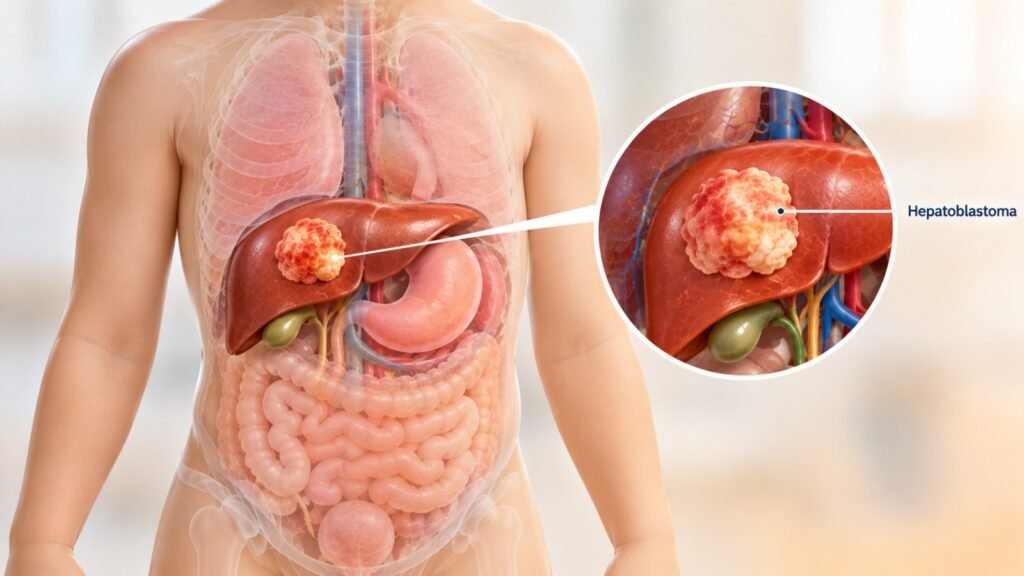
Hepatoblastoma develops in the liver and is most commonly diagnosed in young children. It is different from other childhood liver tumours, so the diagnosis needs to be confirmed through appropriate investigations and specialist review.
The extent of the tumour within the liver and whether it has spread to other parts of the body are important when planning treatment. Doctors also consider the tumour’s pathology and alpha-fetoprotein (AFP) levels as part of the overall assessment.

Hepatoblastoma treatment is planned according to the child’s individual condition. There is no single treatment approach that is suitable for every child.
When the tumour can be safely removed, surgery may be performed to remove the affected part of the liver. In other children, chemotherapy may be given before surgery to reduce the tumour and make removal possible.
If the tumour remains unresectable after treatment, liver transplantation may be considered in selected cases. When the cancer has spread, treatment is planned to address both the primary liver tumour and disease outside the liver.
Several factors are considered before deciding on the treatment plan, including:
These findings are reviewed together rather than using one factor alone to decide treatment.
PRETEXT stands for Pretreatment Extent of Disease. It describes how much of the liver is involved by the tumour before treatment.
POSTTEXT describes the extent of the tumour after treatment, such as chemotherapy. These systems help the surgical team understand how much of the liver is involved and assess whether the tumour may be suitable for surgical removal.
PRETEXT and POSTTEXT are considered along with imaging and other clinical findings when planning treatment.
Surgery is an important part of treatment when the hepatoblastoma can be safely removed.
The aim is to remove the tumour completely while preserving enough healthy, functioning liver. Depending on the child’s condition, surgery may be performed at diagnosis or after chemotherapy.
The surgical plan depends on the tumour’s location and extent, its relationship with major blood vessels, and how it responds to treatment. In selected children, surgery may also be considered for tumours that have spread outside the liver.
Hepatoblastoma treatment is planned according to the child’s individual condition. There is no single treatment approach that is suitable for every child.
When the tumour can be safely removed, surgery may be performed to remove the affected part of the liver. In other children, chemotherapy may be given before surgery to reduce the tumour and make removal possible.
If the tumour remains unresectable after treatment, liver transplantation may be considered in selected cases. When the cancer has spread, treatment is planned to address both the primary liver tumour and disease outside the liver.
Several factors are considered before deciding on the treatment plan, including:
These findings are reviewed together rather than using one factor alone to decide treatment.
PRETEXT stands for Pretreatment Extent of Disease. It describes how much of the liver is involved by the tumour before treatment.
POSTTEXT describes the extent of the tumour after treatment, such as chemotherapy. These systems help the surgical team understand how much of the liver is involved and assess whether the tumour may be suitable for surgical removal.
PRETEXT and POSTTEXT are considered along with imaging and other clinical findings when planning treatment.
Surgery is an important part of treatment when the hepatoblastoma can be safely removed.
The aim is to remove the tumour completely while preserving enough healthy, functioning liver. Depending on the child’s condition, surgery may be performed at diagnosis or after chemotherapy.
The surgical plan depends on the tumour’s location and extent, its relationship with major blood vessels, and how it responds to treatment. In selected children, surgery may also be considered for tumours that have spread outside the liver.
A partial hepatectomy removes the part of the liver containing the tumour. Depending on the tumour’s location and extent, this may involve removing a smaller portion of the liver, a lobe, or a larger section.
The goal is to remove the tumour safely while leaving enough healthy liver to support normal liver function.
Some hepatoblastomas involve a larger area of the liver and may require a more extensive resection.
Whether this is possible depends on the tumour’s anatomy, involvement of blood vessels and the amount of healthy liver that can safely remain. Complex cases require detailed imaging and careful surgical planning.
The liver is divided into different anatomical sections, which allows surgeons to plan resections according to where the tumour is located.
During surgical planning, the team considers how much healthy liver can safely remain after the tumour is removed. Tumour extent, location and involvement of important blood vessels can influence the type and extent of surgery.
When a safe liver resection is not possible, other treatment options, including liver transplantation in selected children, may need to be considered.
Not every hepatoblastoma can be removed safely when it is first diagnosed.
In selected children, chemotherapy may be given before surgery. The tumour is then reassessed with imaging to determine whether it has become suitable for surgical removal.
If the tumour remains unresectable after chemotherapy, a liver transplant may be considered when appropriate. Early assessment by a specialist liver transplant team can be important when imaging suggests that conventional resection may not be possible.
Liver transplantation is not required for every child with hepatoblastoma.
It may be considered when the tumour remains unresectable after appropriate treatment and the child meets the relevant criteria for transplantation. The presence and control of disease outside the liver are also important considerations.
A child being considered for transplantation should be evaluated by a team experienced in pediatric liver transplantation and childhood liver tumours.
Chemotherapy may be used before surgery in children whose tumour needs to be reduced before an operation can be performed safely. This is often referred to as neoadjuvant chemotherapy.
After treatment, imaging is used to reassess the tumour and determine whether it can be removed. Additional treatment may be needed after surgery depending on the child’s tumour type, response and overall treatment plan.
Hepatoblastoma can spread to other parts of the body, with the lungs being a common site of metastatic disease.
When this happens, chemotherapy is an important part of treatment. The liver tumour and disease outside the liver are reassessed after treatment.
If the primary tumour and metastatic disease become suitable for removal, surgery may be considered. Lung metastases do not automatically mean that surgery is impossible, but treatment needs to be planned according to the individual child’s response and disease extent.
Hepatoblastoma can sometimes return after initial treatment. Treatment for recurrent disease depends on where the tumour has returned, the extent of recurrence and the treatments used previously.
For selected children, surgery may be considered when a recurrent tumour can be removed. Chemotherapy and other treatment approaches may also be used. Liver transplantation can be considered in selected situations where the disease remains confined to the liver but cannot be safely removed by conventional surgery.
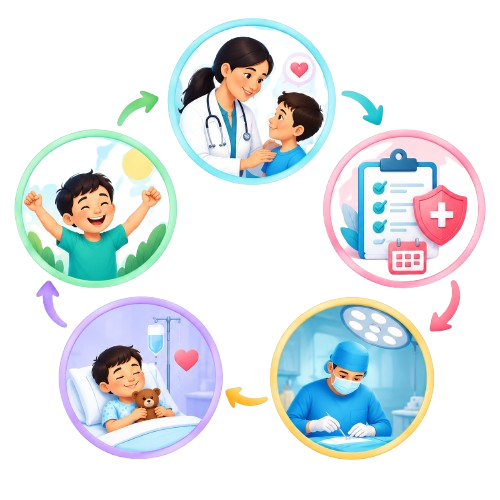
Follow-up continues after treatment to monitor recovery, treatment response and any signs of recurrence.
Depending on the child’s treatment, follow-up may include clinical examinations, blood tests, imaging and monitoring of liver function. Children may also need monitoring for possible long-term effects of cancer treatment.
The follow-up plan is individualised according to the treatment received and the child’s overall condition.
Hepatoblastoma treatment often involves several specialists working together.
The team may include a pediatric surgical oncologist, pediatric medical oncologist, radiologist, pathologist, anesthesiologist and critical care specialists. A pediatric liver transplant team may also be involved when transplantation is being considered.
Working together helps the team review imaging, pathology and treatment response before making major treatment decisions.
A specialist second opinion can be useful when surgery has been recommended or the tumour is considered difficult to remove.
Families may also seek another opinion when chemotherapy is planned before surgery, major blood vessels are involved, liver transplantation has been discussed, or the tumour has returned.
A detailed review of imaging, pathology and previous treatment can help families better understand the available options and how surgery may fit into the overall treatment plan.
 Posted on Google

 Sweta Kalgude
Trustindex verifies that the original source of the review is Google.
We are so grateful for Dr. Monica Bhagat! She is an incredibly kind, caring, and cooperative doctor. She treated my child with so much love and gentle care, which meant the world to us during those anxious moments. She took the time to explain every detail of the treatment so we always understood what was happening, and she was always there to patiently answer our questions whenever we had doubts. Her hands-on expertise and warm heart gave us so much comfort. We highly recommend her to any family! ❤️Posted on Google Praveen SureshDr. Monica Bhagat is an exceptional oncology surgeon who combines extensive knowledge and experience with genuine empathy and compassion. She is courteous, patient, and takes the time to make you feel comfortable and heard. Her professionalism and caring approach really stand out. Highly recommended!Posted on Google
 Dipak PandeThank you for treating our child with so much love and care ...Posted on Google
 GOPAL KumarDr. Monica is the best pediatric oncosurgeon in Mumbai. She explains everything in a very easy language. Highly recommended 💯Posted on Google
 Ravi FuleriyaDr. Monica is an good surgeon, really supportive and nice explanation, thankyouPosted on Google
 Vaibhav PataniWe consulted Dr. Monica Bhagat in Mumbai and had a really good experience. She is a very patient and approachable pediatric oncosurgeon. She explained everything clearly and answered all our questions without rushing us. Very thankful for her guidance and support.
Bring available imaging reports and scans, biopsy or pathology reports, AFP test results, chemotherapy records and previous surgical records if applicable. Having these records together can help the specialist understand the diagnosis and treatment history.
AFP, or alpha-fetoprotein, is a blood marker that is commonly assessed in children with hepatoblastoma. Doctors may monitor AFP along with imaging and other clinical findings to understand the disease and its response to treatment.
Yes, surgery may be considered after chemotherapy when reassessment shows that the tumour has become safely removable. The decision depends on the child's imaging findings, tumour extent and overall treatment response.
Yes. Partial hepatectomy involves removing the part of the liver containing the tumour. The amount that can be removed depends on the tumour's location and extent and how much healthy liver can safely remain.
No. Liver transplantation is not needed for every child with hepatoblastoma. It may be considered for selected children whose tumour remains unresectable after appropriate treatment and who meet the requirements for transplantation.
In selected cases, yes. The child is usually treated and reassessed to determine whether the liver tumour and disease outside the liver can be safely treated or removed. The treatment plan depends on the individual disease and response to treatment.
Surgery can be more complex when the tumour involves a large part of the liver, is close to major blood vessels, involves multiple areas of the liver, or is associated with disease outside the liver. Previous treatment and the tumour's response also influence surgical planning.
Yes. A specialist consultation can include a review of available pathology and other medical records. If required, the treating team may advise whether additional pathology review or testing is needed.
A hepatoblastoma diagnosis can raise difficult questions about chemotherapy, surgery, liver preservation and, in selected cases, transplantation.
A consultation with a pediatric surgical oncologist can help families understand the diagnosis, treatment options and the role of surgery in their child's care.
Dr. Monica Bhagat
Typically replies within minutes
Any questions related to Hepatoblastoma Care?
WhatsApp Us
Online | Privacy policy
Balco Medical Centre, Vedanta Medical Research Foundation, Sector-36, AtalNaga, PO:Uparwar, Raipur, Chhattisgarh 493661
Mulund - Goregaon Link Rd Nahur West, Industrial Area, Bhandup West, Mulund West, Mumbai, Maharashtra 400078
1, 1A, Keshavrao Khadye Marg, Haji Ali, Haji Ali Government Colony, Mahalakshmi, Mumbai, Maharashtra 400034,
1st, Pokhran Rd, Shastri Nagar, Vartak Nagar, Thane West, Thane, Maharashtra 400606
Thane Hiranandani Estate, Queens Street, opposite the Brentford Building, Patlipada, Ghodbunder Road, Thane West, Maharashtra 400607.